
1. How AI Has Changed Search Engines
From Keywords to Intent
The era of stuffing pages with exact-match keywords is definitively over. Google’s AI systems — particularly BERT (Bidirectional Encoder Representations from Transformers) and MUM (Multitask Unified Model) — understand language contextually. They comprehend synonyms, nuance, conversational phrasing, and the relationship between concepts, meaning search engines now rank content based on how well it satisfies user intent, not just keyword frequency.
Search Generative Experience (SGE)
Google’s AI-generated search summaries represent perhaps the biggest shift in search in a decade. SGE provides AI-written answers directly in the search results page, drawing from multiple authoritative sources. For content marketers, this changes the calculus: ranking position one no longer guarantees the same traffic it once did, but being cited as an SGE source provides enormous brand visibility and trust.
Entity-Based SEO
AI-powered search engines organize knowledge around entities — people, places, brands, concepts — rather than just keywords. Modern SEO requires establishing your brand, authors, and content as trusted entities within your niche, reinforcing connections between related topics and building what SEO professionals call topical authority.
E-E-A-T and AI Quality Signals
Google’s Search Quality Evaluator Guidelines emphasize Experience, Expertise, Authoritativeness, and Trustworthiness (E-E-A-T). AI systems evaluate these signals by analyzing author credentials, backlink profiles, brand mentions, content depth, and user engagement metrics. High E-E-A-T is increasingly essential for ranking competitive keywords.
2. AI Tools Transforming the SEO Workflow
Keyword Research and Opportunity Discovery
Traditional keyword research meant pulling data from a handful of tools and manually identifying opportunities. AI-powered platforms like Ahrefs, Semrush, and Moz now offer predictive keyword difficulty scores, SERP feature analysis, and automated opportunity clusters that surface high-potential keywords you might never have discovered manually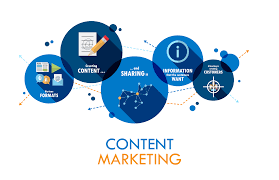
Newer tools like Keyword Insights and NeuronWriter use AI clustering to group thousands of keywords by search intent, enabling content teams to build comprehensive topic pillars rather than targeting isolated keywords one by one.
Content Briefs and Outlines
AI content brief generators — such as Frase, Clearscope, and Surfer SEO — analyze the top-ranking pages for a given keyword and extract the topics, subtopics, questions, and semantic terms that the best-performing content covers. Instead of spending hours researching competitors, a marketer can generate an AI-powered brief in minutes, ensuring comprehensive coverage that search engines reward.
On-Page Optimization
AI optimization tools analyze your draft content against competitive benchmarks and provide actionable recommendations: adjust your word count, add specific semantic keywords, restructure headings, improve readability, or target specific SERP features like featured snippets or People Also Ask boxes. These data-driven refinements significantly increase the probability of ranking.
Technical SEO Automation
Content Marketing is also automating technical SEO tasks that once required developer involvement. Tools can automatically identify and categorize crawl errors, detect duplicate content, flag core web vitals issues, recommend canonical tags, and even generate schema markup — reducing the technical debt that silently undermines rankings.
3. AI-Powered Content Creation for SEO
Using AI to Scale Content Production
One of the most significant advantages AI provides content teams is the ability to scale production without proportional scaling of resources. AI writing assistants can generate first drafts, expand outlines, write meta descriptions, craft title tags, and produce FAQ sections — freeing human writers to focus on editorial quality, unique insights, and storytelling.
The key distinction for SEO success is that AI-generated content should serve as a starting point, not a finished product. Search engines are increasingly sophisticated at detecting thin, generic content. The most effective approach combines AI efficiency with human expertise and original perspective.
Optimizing for Featured Snippets
AI tools can analyze which content formats — paragraph, list, table, step-by-step — trigger featured snippets for specific queries. By structuring content to answer target questions concisely and accurately in the preferred format, marketers dramatically increase their chances of capturing position zero in search results.
Long-Form Content Strategy
Long-form content — comprehensive guides, pillar pages, and authoritative resources — consistently outperforms thin content in competitive niches. AI tools assist by identifying all the subtopics a pillar page should cover, ensuring no question goes unanswered. AI also helps maintain logical structure and flow across thousands of words, preventing the rambling that plagues manually written long-form content.
Multilingual SEO at Scale
For brands targeting international audiences, AI translation and localization tools enable content to be adapted for multiple languages and cultural contexts far faster than traditional human translation alone. Combined with AI keyword research for local markets, this enables cost-effective global SEO strategies.
4. Content Clusters and Topical Authority
Why Topical Authority Matters More Than Ever
Google’s AI systems reward websites that demonstrate deep, comprehensive expertise on a topic. Building topical authority means creating interconnected content that covers a subject from every angle — not just targeting isolated keywords. This approach signals to search engines that your site is a trusted resource worthy of ranking for the entire topic cluster.
Building a Topic Cluster Strategy with AI
AI tools simplify the process of mapping out topic clusters. By analyzing competitor content, search data, and related queries, AI can generate a blueprint of pillar pages and supporting content pieces that together build comprehensive topical authority. This structured approach replaces the ad-hoc content calendars many teams still rely on.
Internal Linking Optimization
Internal linking is a critical but often neglected SEO lever. AI tools analyze your existing content and identify opportunities to add internal links between related pages, strengthening topical relationships and distributing page authority more effectively throughout your site.
5. AI Analytics for Content Performance
Moving Beyond Pageviews
Content Marketing-powered analytics platforms go far beyond pageviews and bounce rates. They analyze content performance in the context of business outcomes — which content drives email sign-ups, trial activations, purchases, or other conversion events — enabling content teams to demonstrate ROI and invest in what actually matters.
Identifying Content Decay
One of the most underutilized applications of AI in content marketing is detecting content decay — the natural decline in search rankings and traffic that affects most content over time. AI tools monitor ranking trajectories and traffic trends across your entire content library, alerting you to pages in need of updating before significant traffic loss occurs.
Competitor Content Intelligence
AI-driven competitive analysis tools track competitors’ content strategies in real time — new pages published, keywords targeted, backlinks earned, SERP features captured. This intelligence enables content teams to respond quickly to competitive threats and identify gaps the competition has yet to address.
Predictive Content Performance
Some advanced AI platforms now predict the likely traffic and ranking potential of content before it is created, based on keyword difficulty, domain authority, content quality scores, and historical performance data. This helps content teams prioritize their roadmap around the highest-impact opportunities.
6. Voice Search and Conversational Content
The Rise of Voice Search
The proliferation of smart speakers, voice-activated devices, and AI assistants has created a growing segment of voice-based search queries. Voice queries tend to be longer, more conversational, and question-based compared to typed searches. Optimizing for voice means writing naturally, targeting question-based queries, and structuring answers concisely.
FAQ Optimization for Voice and SGE
FAQ sections optimized with clear, direct answers to common questions perform exceptionally well in both voice search and AI-generated search summaries. AI tools help identify the most frequently asked questions within a topic and structure responses in the format most likely to be surfaced by voice assistants and SGE.
Conversational Keyword Research
AI-powered keyword tools now surface conversational and long-tail queries that reflect how people actually speak and type when searching. Targeting these queries often reveals lower-competition opportunities with strong commercial intent.
7. Building an AI-Enhanced Content Marketing Operation
Integrating AI Into Your Workflow
Successfully integrating AI into a content marketing operation requires mapping AI tools to specific workflow stages: research, briefing, writing, optimization, publishing, and performance monitoring. Each stage has AI solutions that reduce friction and improve output quality.
Start by identifying your team’s biggest time sinks and pain points, then pilot AI tools that directly address those challenges. Avoid the temptation to adopt every available tool simultaneously — focus on mastering a small number of high-impact solutions first.
Human Oversight and Editorial Standards
AI raises the floor of content quality but does not eliminate the need for strong editorial judgment. Establish clear editorial standards for AI-assisted content: every piece should include original insights, accurate information verified by human reviewers, a distinct brand voice, and genuine value for the reader beyond what can be found in competing content.
Measuring AI’s Impact on SEO Performance
Track key metrics before and after AI tool adoption: organic traffic, keyword rankings, content production velocity, time spent per piece, and conversion rates from organic content. These before-and-after comparisons help justify AI investment and identify where further optimization is needed.
8. The Future of AI in SEO and Content Marketing
AI Agents and Autonomous Content Operations
The next frontier in AI-powered content marketing is autonomous agents — AI systems capable of researching topics, generating content briefs, writing drafts, optimizing for SEO, scheduling publication, and monitoring performance with minimal human intervention. While fully autonomous content operations are still emerging, the building blocks are already in place.
Multimodal Content Optimization
As search engines evolve to understand images, videos, audio, and documents alongside text, AI tools are expanding to optimize content across all formats. Marketers will need to think about SEO not just for text but for every content format their brand produces.
The Evolving SERP Landscape
Search engine results pages will continue to evolve as AI becomes more central to search. Marketers must remain agile, monitoring how AI-driven changes to SERP layouts affect traffic patterns and adjusting content strategies accordingly.
Conclusion
Artificial intelligence has permanently altered the relationship between content, SEO, and search engines. Search algorithms powered by AI demand content that genuinely serves users — comprehensive, accurate, trustworthy, and well-written. And the tools available to content marketers are now sophisticated enough to help any team compete at the highest level.
The content marketing winners of this era will be those who use AI not to cut corners, but to work smarter — producing more content without sacrificing quality, targeting audiences with surgical precision, and building the kind of topical authority that earns sustained organic visibility.
Embrace AI as a partner in your content marketing operation, maintain rigorous editorial standards, and never lose sight of the reader whose problem you are trying to solve. That human-centered approach, amplified by AI, is the formula for content marketing success in the years ahead.
Word Count: ~1,980 words Category: AI SEO & Content Marketing Tags: AI SEO, content marketing, AI content tools, search generative experience, topical authority, keyword research, content optimization